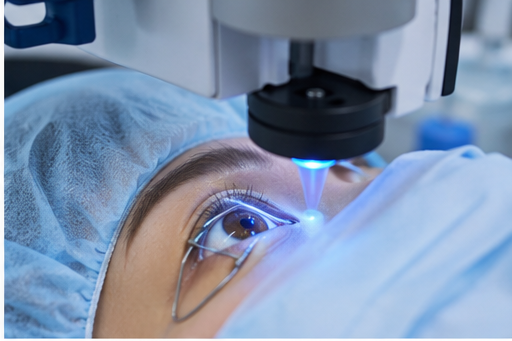
Vision correction is one of the more travel-friendly procedures: the surgery itself is quick, and same-week flying is often fine for SMILE/LASIK once cleared. Still, build in time for the pre-op exam a day or two before surgery (some findings can change the plan), and at least one post-op check before you leave. If you're combining it with a broader beauty trip, our first-timer's guide to medical tourism in Seoul helps you sequence everything.
Choosing the Right Clinic
Vision correction is elective surgery on a healthy, irreplaceable organ — the surgeon and screening matter more than the discount. Look for:
- A dedicated ophthalmology centre with a high surgical volume and modern SMILE/femto platforms.
- A comprehensive pre-op exam (corneal topography and thickness, tear-film testing, dilated check) — not a same-day rush to surgery.
- Clear candidacy honesty — a willingness to recommend a different method, or to decline, when your eyes call for it.
- English-language support and a proper post-op follow-up plan.
For the classic head-to-head, our guide on LASIK vs LASEK in Korea goes deeper on those two, and the principle of putting the surgeon before the price is covered in choosing a master specialist in Korea.
Frequently Asked Questions
Which is best — SMILE, LASIK, LASEK, or ICL?
None is universally best. SMILE suits dry-eye-prone and active patients, LASIK offers fast recovery for a broad range, LASEK fits thin corneas and high-impact lifestyles, and ICL is the go-to for very high prescriptions or corneas too thin for laser. Your exam decides.
How long do I need to stay in Korea?
Plan for a short trip: a pre-op exam a day or two before surgery, the procedure, and at least one post-op check. SMILE/LASIK patients are often cleared to fly within days; LASEK's slower surface healing may warrant a little longer.
Is laser eye surgery in Korea safe?
At a reputable, high-volume centre with thorough screening, these are among the most refined vision-correction procedures available. Risk rises when screening is rushed — which is why candidacy testing is the thing to scrutinise.
Can it be reversed if I don't like it?
Laser methods (SMILE, LASIK, LASEK) permanently reshape the cornea and are not reversible. ICL is the exception — the implanted lens can be removed or exchanged, which is part of its appeal.
Will I still need reading glasses later?
Vision correction fixes distance vision; it doesn't stop age-related presbyopia. Most people still need reading glasses in their mid-40s and beyond, regardless of which procedure they had.