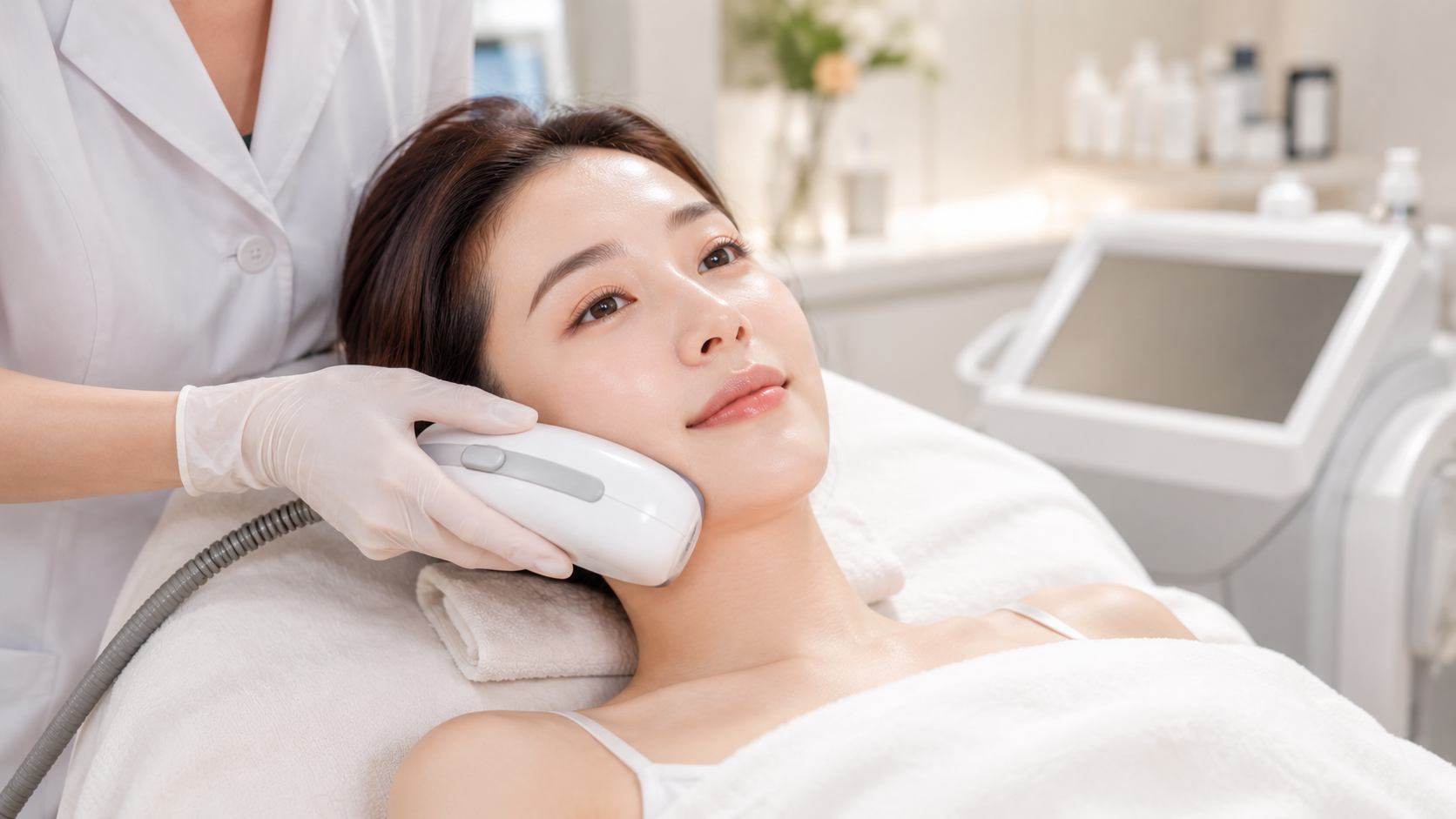
Non-surgical skin tightening is one of the top reasons international patients visit Korean dermatology clinics. For years, two devices have dominated the conversation — Thermage and Ultherapy. More recently, Endolift, a minimally invasive laser, has become a popular third option. These treatments are not interchangeable: they work at different depths, target different concerns, and involve different amounts of downtime. Choosing well starts with understanding what each one actually does. (If you're weighing only the two non-invasive devices, our detailed [Ultherapy vs Thermage in Korea](/contents/ultherapy-vs-thermage-korea) comparison goes deeper on those two.)
How Each Treatment Works
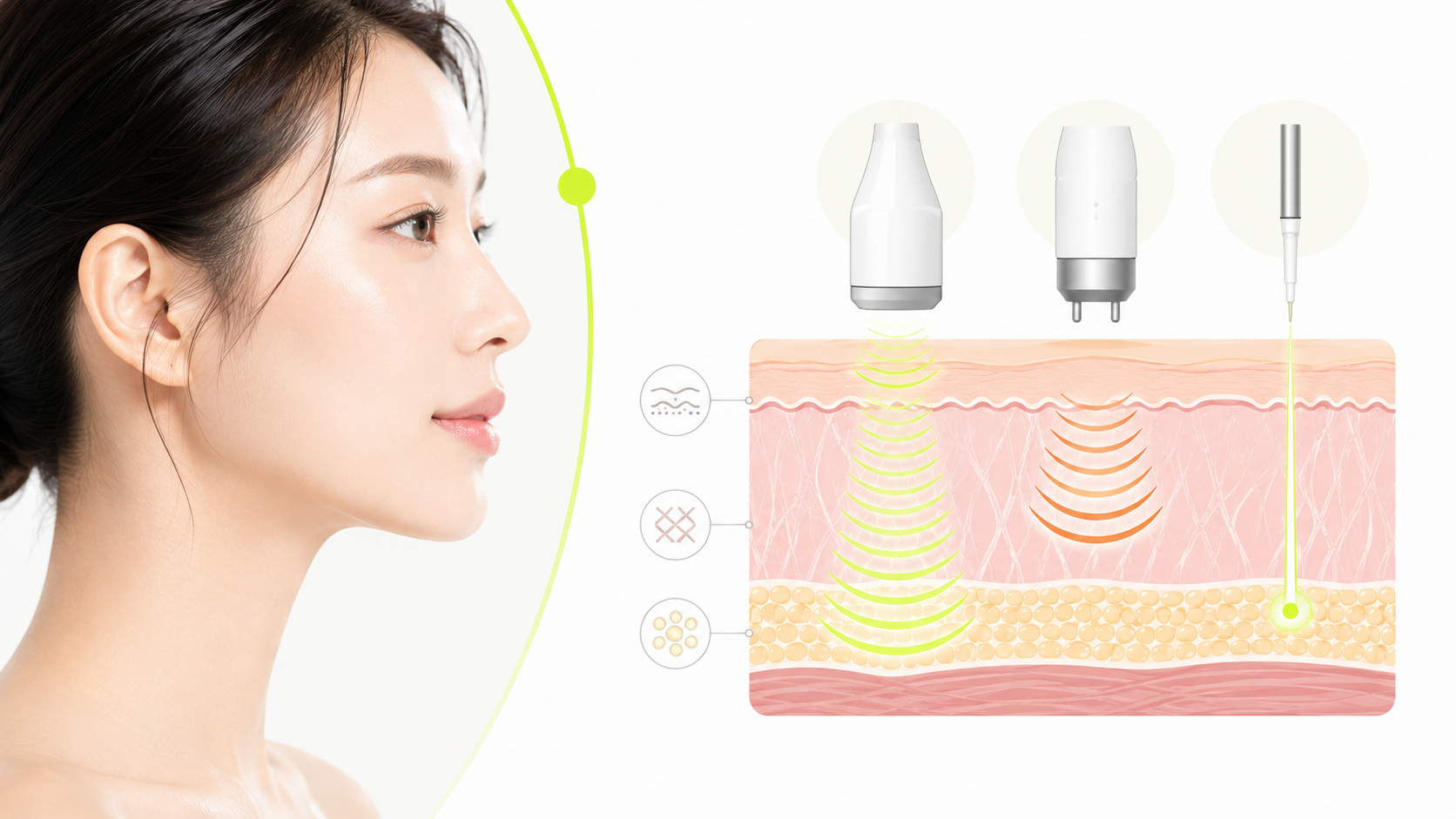
Ultherapy uses micro-focused ultrasound to deliver energy to the deep SMAS layer — the same foundational layer surgeons address in a facelift. It is applied externally with no downtime, and is best known for lifting the brow, neck, and jawline. Results develop over 2–3 months and typically last 12–18 months.
Thermage uses radiofrequency energy to heat the deeper skin and stimulate collagen remodeling. It is also non-invasive, and is particularly good for overall tightening and smoother skin texture across the face. Results build over roughly six months and can last one to two years.
Endolift is different in kind. Rather than working from outside the skin, a fine laser optical fiber is inserted just beneath the surface to stimulate collagen and gently melt small pockets of fat. This places it between the non-invasive devices and surgery. It suits mild sagging combined with small fat deposits, and involves a few days of mild swelling or bruising.
These treatments are often complementary rather than competing. A dermatologist may combine, for example, Ultherapy for deep lift with Thermage for surface texture, or use Endolift to refine an area the external devices cannot fully address.
Before You Book
- Have a consultation so the treatment is matched to your skin and goals — not chosen from a menu.
- Confirm you are seeing a licensed dermatologist and that genuine, certified devices are used.
- Keep the timeline realistic: these treatments work by stimulating your own collagen, which takes months to show.
- None of them is a weight-loss treatment or a permanent, one-and-done fix.
Korea's dermatologists are among the most experienced practitioners of all three treatments, and all are widely available — which is exactly why comparing them properly, rather than picking by name recognition, is worth the effort.