"How much does it cost?" is the first question almost every international patient asks about Korea — and the honest answer is: less than you'd pay at home for comparable skill, but with a real range that depends on the procedure, the surgeon, and how complex your case is. This guide lays out realistic 2026 price bands for the most-requested treatments, explains what actually drives the number up or down, and shows how to read a quote so you're comparing like with like.
A Realistic 2026 Price Guide
The ranges below are typical prices international patients see at reputable Seoul clinics in 2026, in US dollars. Treat them as ballparks — your real quote comes from a consultation, and the cheapest number is rarely the one to chase.
| Procedure | Typical range (USD) |
|---|
| Double eyelid (non-incisional) | $1,000 – $2,500 |
| Double eyelid (incisional) | $1,800 – $3,500 |
| Ptosis correction | +$1,000 – $2,500 |
| Rhinoplasty (tip / minor) | $2,500 – $5,000 |
| Rhinoplasty (full, implant + cartilage) | $4,000 – $8,000 |
| Revision / rib-cartilage rhinoplasty | $8,000 – $15,000+ |
| Facial contouring (V-line / jaw) | $6,000 – $12,000 |
| Cheekbone (zygoma) reduction | $4,000 – $8,000 |
| Facial fat grafting | $2,000 – $4,500 |
| Breast augmentation | $6,000 – $12,000 |
| Liposuction (per area) | $1,500 – $4,000 |
| Facelift (SMAS / deep-plane) | $8,000 – $20,000 |
| Botox (per area) | $50 – $200 |
| Filler (per syringe) | $200 – $500 |
| Ultherapy / Thermage | $700 – $3,500 |
| Skin boosters (e.g. Rejuran, per session) | $150 – $400 |
| LASIK / SMILE | $1,500 – $3,000 |
| ICL (implantable lens) | $4,000 – $6,000 |
What Drives the Price
Two clinics can quote very different numbers for the "same" surgery. The difference usually comes down to:
- The surgeon's experience and reputation. A sought-after specialist commands more than a general practitioner — and for surgery, that premium is often the best money you spend.
- Case complexity. A first-time nose is not a revision; a simple lipo area is not full-body contouring. Harder cases cost more because they take more skill and time.
- Materials and technique. Rib cartilage, premium implants, or advanced devices (Ultherapy Prime, deep-plane facelift) raise the price over basic approaches.
- Anaesthesia and hospital fees. Sedation or general anaesthesia, an overnight stay, and aftercare are sometimes bundled and sometimes not.
- What's included. Post-op care, follow-ups, medications, and revision policy vary — and change the true total.
Why Korea Costs Less (Without Cutting Corners)
Lower prices in Korea aren't about lower quality — they're structural:
- Volume. Seoul's clinics perform enormous numbers of these procedures, which lowers per-case cost and sharpens technique.
- Competition. A dense, highly competitive market keeps prices honest.
- Efficiency. Streamlined, procedure-focused clinics run leaner than many Western hospital systems.
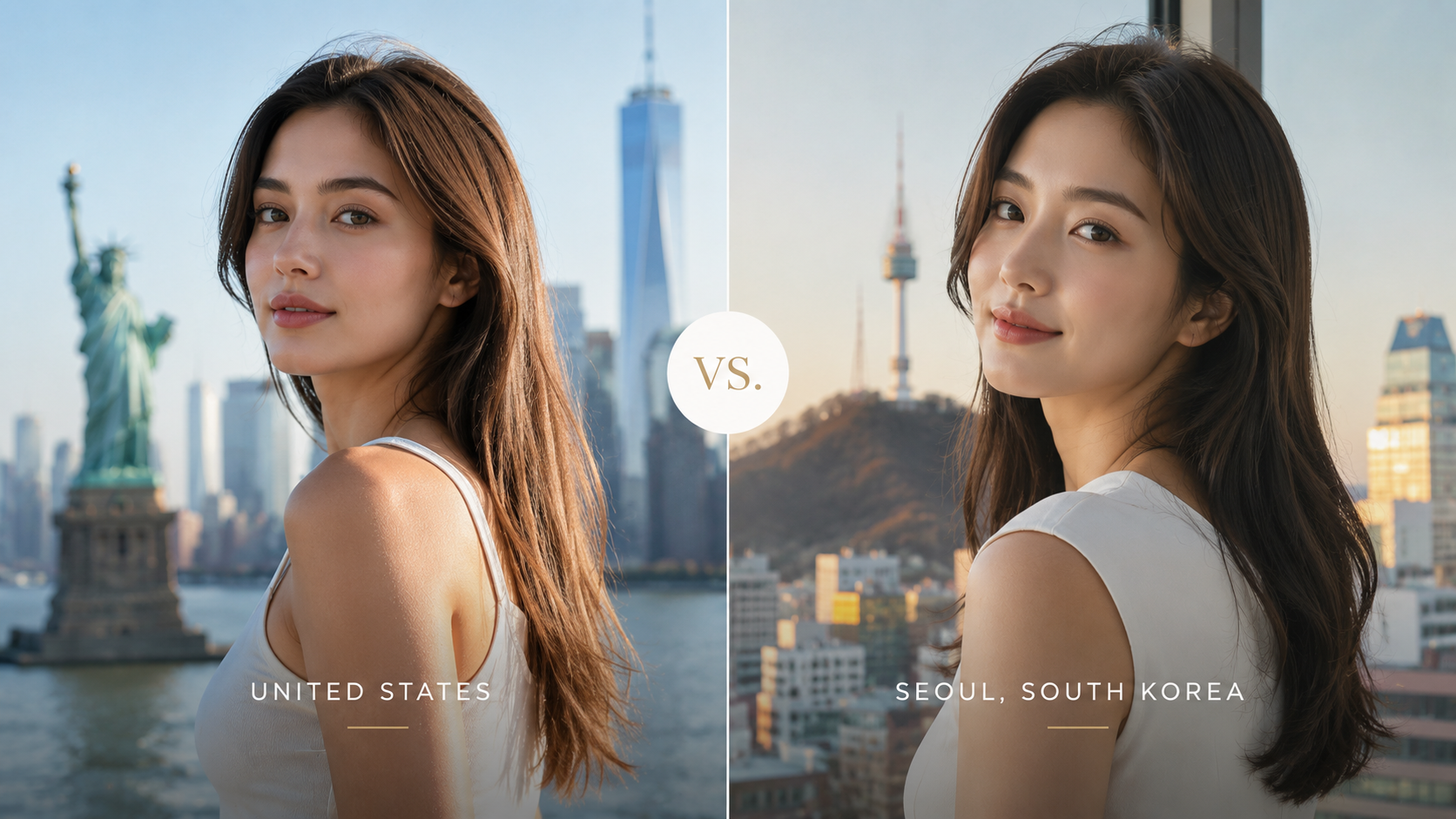
- Favourable exchange rates. For many international visitors, the won stretches further, widening the gap. Our Korea vs. USA comparison breaks the difference down side by side.
Tip: A price far below every other quote is a warning sign, not a bargain. Rock-bottom pricing can signal an inexperienced surgeon, a "ghost doctor" swap, or costs that reappear later as add-ons.
Hidden Costs to Budget For
The surgery fee is not the trip total. Build in:
- Flights and accommodation for the length of your recovery window.
- Pre-op tests (bloodwork, imaging) if not included.
- Medications and aftercare — dressings, scar care, follow-up visits.
- A buffer for a longer stay if swelling or healing needs more time.
- Revision risk. Ask upfront what a revision would cost and under what conditions it's covered.
How to Read a Quote
To compare clinics fairly, make every quote answer the same questions: Is anaesthesia included? Are follow-ups and medications included? What is the revision policy? Who exactly is performing the surgery? A slightly higher quote that includes aftercare and names your surgeon can be far better value than a cheaper one that doesn't. For specific procedures, we have deeper cost breakdowns like how much double eyelid surgery costs in Korea and full pricing context in the complete rhinoplasty guide.
Price Should Come Second
The most expensive mistake in medical tourism is choosing on price alone. A revision to fix a cheap first surgery almost always costs more — in money, time, and stress — than doing it once, well. Decide on the surgeon and the plan first, then look at the number. Our guide on choosing a master specialist in Korea explains exactly why the surgeon matters more than the sticker price.
Frequently Asked Questions
Why is plastic surgery so much cheaper in Korea?
It's structural, not a quality trade-off: very high procedure volume, intense competition, efficient procedure-focused clinics, and favourable exchange rates for many visitors combine to lower prices while technique stays world-class.
Are the prices in this guide fixed?
No — they're realistic 2026 ranges. Your actual quote depends on the surgeon, your case complexity, materials, and what's bundled in. Always confirm with a consultation.
Should I choose the clinic with the lowest quote?
Rarely. An unusually low price can mean an inexperienced surgeon, a doctor swap, or add-on costs later. Compare what's included and who's operating, not just the headline number.
What extra costs should I plan for beyond surgery?
Flights, accommodation for your recovery window, pre-op tests, medications and aftercare, a buffer for a longer stay, and the possibility of a future revision.
Is financing or a deposit normal?
Many clinics take a deposit to hold a surgery date and settle the balance in person. Be cautious of large upfront payments before you've had a proper consultation and confirmed your surgeon.