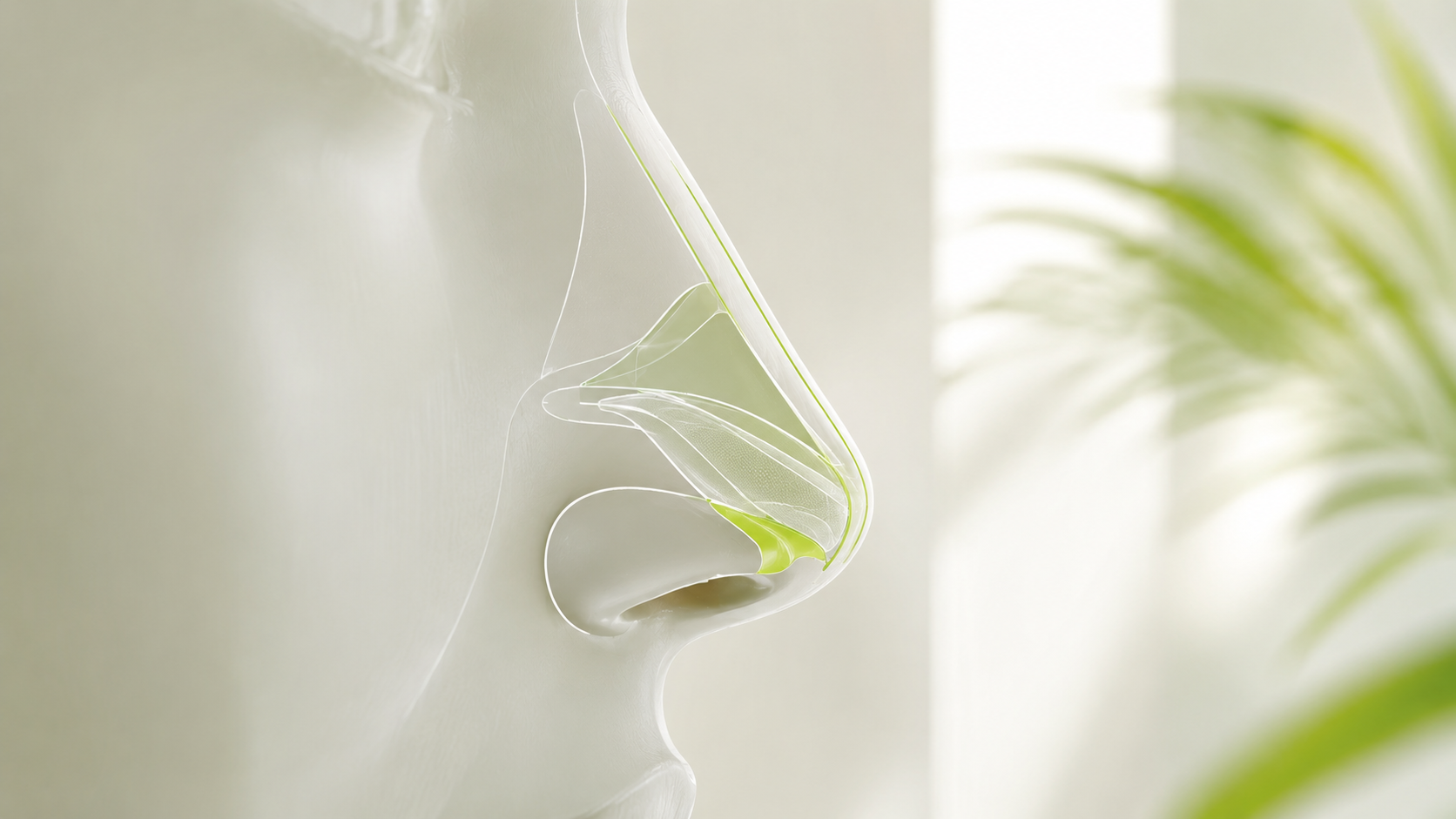
Rib cartilage rhinoplasty is one of the most talked-about — and most misunderstood — techniques in Korean nose surgery. It has a reputation as the "heavy artillery" of rhinoplasty: powerful enough to rebuild a nose from the ground up, but demanding enough that it should only be done for the right reasons and by the right hands. If you've been told you might need rib cartilage, or you're researching a complex or revision case, this guide explains what it actually involves, when it's genuinely necessary, and the honest trade-offs.
What Is Rib Cartilage Rhinoplasty?
Rib cartilage rhinoplasty (also called costal cartilage rhinoplasty) uses a small amount of the patient's own rib cartilage — usually harvested from the area of the sixth or seventh rib — to reshape and structurally support the nose. Because it comes from your own body, it is autologous tissue: there is no synthetic implant, which means a far lower risk of the rejection, extrusion, and long-term foreign-body problems that can accompany silicone or Gore-Tex.
The reason surgeons reach for rib is simple: it provides a large volume of strong, rigid cartilage. When a nose needs a genuinely strong new framework — not just a small refinement — rib is often the only material that can supply it.
When Is Rib Cartilage Actually Needed?
Rib cartilage is not for routine, first-time cosmetic rhinoplasty. It is reserved for cases that need serious structural support, including:
- Revision rhinoplasty, especially when previous surgery has used up the septal cartilage that would normally be the first choice.
- The short or contracted nose, where the nose needs to be lengthened and held in a new position against scar tissue.
- Saddle-nose or collapsed bridges that need substantial rebuilding.
- Weak or depleted native cartilage, where the patient simply doesn't have enough septal or ear cartilage for the job.
- Patients who want a strong result without any synthetic implant, often for personal or long-term-safety reasons.
If your case is a straightforward augmentation and you have healthy septal cartilage, you very likely do not need rib.
Rib vs. Septal vs. Ear Cartilage vs. Implants
Each graft material has a role, and a good surgeon chooses based on what the nose needs:
- Septal cartilage — the first choice when available. Straight, strong enough for most tip and support work, and taken from inside the nose with no external donor site. The catch: there's a limited amount, and revision patients are often already "out" of it.
- Ear (conchal) cartilage — useful and easy to harvest, but naturally curved and relatively soft. Good for the tip and alar rims; not strong enough for major dorsal support.
- Rib (costal) cartilage — abundant and rigid, the workhorse for major reconstruction. The trade-off is a chest donor site and a tendency to warp.
- Synthetic implants (silicone, Gore-Tex) — can give a clean dorsal line in primary cases, but carry lifelong risks of infection, extrusion, and capsular contracture. Many complex and revision cases are specifically about removing a problem implant and replacing it with rib.
How the Procedure Works
The surgeon harvests a small segment of costal cartilage through a short incision near the lower chest (often hidden in the breast crease in women). That cartilage is then precisely carved into the grafts the nose needs — a dorsal graft for the bridge, a septal extension graft to set tip position and length, spreader grafts, and tip grafts.
A key modern refinement is diced cartilage, sometimes wrapped in the patient's own fascia (a technique known as diced cartilage in fascia, or DCF). Dicing the cartilage into tiny pieces for the bridge produces a smooth, natural contour and dramatically reduces the risk of warping and visible edges compared with a single solid dorsal graft.
The Real Trade-offs and Risks
An honest guide has to cover the downsides, because they are the whole reason rib is not used casually:
- Warping. Rib cartilage has a "memory" and can bend over time. Experienced surgeons manage this with balanced, concentric carving, by letting the cartilage settle before use, by dicing it, or by placing an internal K-wire — but warping is the central technical challenge of the technique.
- The chest donor site. You gain a small chest scar and some soreness for a couple of weeks. A rare but serious risk during harvest is pneumothorax (air around the lung), which skilled surgeons take specific steps to avoid.
- Calcification in older patients. Rib cartilage tends to calcify with age, making it harder and more brittle to carve — a factor surgeons weigh in older candidates.
- Longer, more complex surgery with a correspondingly more involved recovery than a simple primary rhinoplasty.
Recovery Timeline
You are recovering two areas at once. The nose follows the usual rhinoplasty course: a splint for about a week, the bulk of the swelling easing over a few weeks, and the fine, final result settling over many months. The chest donor site is typically the more surprising part for patients — expect soreness that makes deep breaths, laughing, and coughing uncomfortable for one to two weeks, easing steadily after that. The scar matures and fades over the following months.
Who Is a Good Candidate
Rib cartilage rhinoplasty suits patients who genuinely need strong structural support: complex revisions, contracted or short noses, significant augmentation without an implant, or depleted-cartilage cases. It is over-treatment for a simple, healthy primary nose — and a good surgeon will tell you so.
Why the Surgeon Matters More Than Anything
This is a technique where experience is not optional. Harvesting safely, carving to avoid warping, and building a stable structural framework are advanced skills that separate specialists from generalists. For anyone considering rib cartilage — and complex noses in general — choosing the surgeon should come well before choosing on price. Our guide on how to choose a master specialist in Korea walks through exactly what to look for, and if you're weighing a difficult revision, see our guide to complex revision rhinoplasty.
Frequently Asked Questions
Is rib cartilage better than a silicone implant?
For strong structural needs and for anyone wanting to avoid a synthetic implant, autologous rib avoids the infection and extrusion risks of implants. But it's more involved surgery — it's "better" only when the case actually calls for it, not for every nose.
Will the rib cartilage warp later?
Warping is the main technical risk. Modern methods — balanced carving, diced cartilage, internal splinting — greatly reduce it in experienced hands, but no technique eliminates it entirely, which is why surgeon skill is decisive.
How big is the chest scar?
Usually a few centimeters, placed as discreetly as possible (often in the breast crease). It fades over time but is permanent.
Do I really need rib for my nose?
Only if you lack enough septal/ear cartilage or need major structural rebuilding. Many primary cases don't. A trustworthy consultation should explain why rib is or isn't recommended for you specifically.